
Zaitoun
Batata Harra, Roast Rainbow Carrots with Herbed Yogurt, Mujaddara, Za'atar Roast Salmon with Garlicky Bean Mash, Kibbeh Bil Saneeyeh, Pomegranate Passion Cake

The next book off the shelf is one that I think I may have chosen for the cover art (and also a glowing recommendation from one of my online cookbook clubs) and I have no regrets there. Zaitoun by Yasmin Khan is a GORGEOUS book looking into Palestinian cuisine in a modern and approachable way. Yes there are some spices and grains required that you may not have heard of before, and also some unique flavor combinations that maybe you never considered, but I promise you if you cook from this book you will not be disappointed.
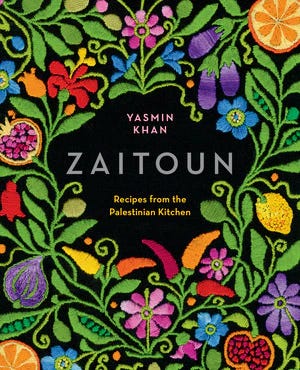
For years I have used this book as a reference point to prepare dishes for clients, dinner guests, and everything in-between those two categories! I was so delighted at the opportunity to finally really delve into it and taste as much as possible for myself. We marked more recipes than we ended up making, but isn’t that always the case?


Coming off a week of chicken… we decided to change things up and made zero chicken recipes from this book (although I have made the Za’atar Chicken recipe and it is amazing). We started off with two veggie sides, thinking we would incorporate them into our meals throughout the week. The Batata Harra or Lemon & Chilli Roast Potatoes were the perfect side dish to add to our meals. A bit of heat from the chilli, zing from the lemon, along with all the salty starchy goodness that potatoes hold made these potatoes stand out as the perfect side dish (one I wished I had discovered sooner). We used Pul Biber chili flakes which I happen to have, but you can also sub for a lesser amount of more commonly found chilli flakes. These were great as a savory side with lunches and dinners, but would also complement some eggs for a wake-me-up spicy breakfast!


The second veggie side dish we chose is pictured so beautifully in the book… a two page spread of photos for this one little dish… that we just had to try and re-create. We love the carrots we get from Sunrise Organic Farms (located in Lompoc, CA just north of us, near Santa Barbara), and they had a rainbow display at our farmer’s market the week we were starting this book, so it was the perfect opportunity to make the Roast Rainbow Carrots with Herbed Yogurt. We didn’t exactly re-create the dish as pictured, but mixed the yogurt in when we served it (super garlicky), and ate the dish for a few days! Who doesn’t love a roasted carrot? If I’m being honest with you, I think roasting carrots is one of the best ways to bring forward all of their natural flavors. Carrots are sweet like candy if you let them be so! Don’t sleep on roasting your carrots, it’s so easy and there’s a million ways you can flavor them (before, during, and after cooking them!).


The first main dish we made to go with our veggie sides was the Za’atar Roast Salmon with Garlicky Bean Mash. I think Za’atar is one of those underrated herb blends that we really should bring more into the western mainstream. It exists mostly in middle-eastern savory cooking, but there is so much versatility there waiting to be unleashed. Your most basic Za’atar recipe may change based on the origin, but most recipes include oregano, marjoram, sumac, salt, and sesame seeds. I mentioned earlier that I’ve made the Za’atar Chicken recipe in this book, so I already knew it would be great on the salmon. The flavors pair nicely with any protein (Za’atar Turkey for Thanksgiving anyone?)! The lemon squeezed on top of everything before serving only further enhances the already ever-present zing in the za’atar herb blend, and mellows out the garlic in the beans a bit. This dish is a fantastic option for any of your pescatarian friends, and I’m looking forward to making it for future Shabbat dinners. It was kind of perfect in every way. Easy to prepare, serve, and eat!


I spent eons trying to find a brown-rice Mujaddara recipe to make for my clients. I think it is just one of those dishes that is completely elevated over rice pilaf (and you know I love my rice pilaf). If you don’t know, Mujaddara is a rice and lentil dish that is typically topped with (very lightly floured) fried crispy onions. Like Hummus, it exists in many Middle-Eastern cultures and each region has their own version of it. I easily find recipes that call for white rice, but many of my clients back in the day wanted brown rice dishes. I finally came up with a version that worked for me, but somehow had missed this version in all of the times I had flipped through this book (it was that Upside-Down Eggplant Rice a few pages ahead of this one that I always stopped at). Now I wish I had known about this version because it came together so beautifully. I had never thought to cook brown rice how I cook extra long grain rice (in a pot of boiling water and drained of the liquid instead of steaming it and waiting 45+ minutes for the water to be absorbed), but this recipe has you do just that. This Mujaddara uses a few pots (I’m not going to lie there), but it is worth the dish-washing for an excellent side dish to accompany a variety of mains.
At some point in culinary school we made a kibbeh recipe using bulgur, they were football-shaped meatball-esque things that were delicious, but not at all like kibbeh I have seen in cookbooks since then. When I met one of my newer clients back in 2019, they asked me if I could make a Kibbeh cake for them. A Kibbeh cake??? What even was that! I did some quick online research and found that you could bake your meat and bulgur mixture in a pan… like a cake (or a meatloaf) and it was a game changer!


This recipe for Kibbeh Bil Saneeyeh takes it to the next level. Not only do you bake your meat mixture in a pan, you first create a crust with the bulgur (and a bit of lamb and onion) and stuff the meat inside. Making this recipe was like achieving the next possible level of Kibbeh making (and boy was it worth it). A delicious combination of crispy on the outside bulgur crust with a soft, meaty, juicy center of lamb mixed with an array of spices so beautifully fragrant you could practically see the cartoons floating by the window, noses up! The ingredient that really surprised us in this recipe was the addition of pomegranate molasses in the meat. I have used pomegranate molasses in savory cooking before, but in this recipe it almost created a jammy flavor in the meat that was next to godliness! As per usual I skipped the pine nuts requested by this recipe as I am not a nut person or a nut fan, and I don’t think the others who ate this dish with me were disappointed with that change, but otherwise I followed it to the letter. We made this dish in advance and ate it for days on end. Adding slices of it to salads for lunches all week. It definitely feeds a crowd, and is worth the hard work of creating that bulgur crust… trust me, you’ll know what I mean when you take that first bite.
You all must know by now that if I choose to make a dessert recipe from a (mostly) savory cookbook, there must be something drawing me to that choice. It’s not that I don’t have a sweet tooth or that I don’t like baking, it’s just that in the week-to-week it would be tough to make a dessert from each book. However, the week I cooked from this book coincided with my dad’s birthday, and this cake sounded like a perfect option to prepare for that celebration. My dad is famously not a cake person. He thinks mainstream cakes just taste like sweetened air with cream on top (and he’s not wrong, some cakes do taste like that), he’d rather bite into a tart, pie, or more often than not — a slice of bread pudding, before he would think to order a cake. I’ve spent much of the last 10 years trying different cake recipes on him so I can figure out just what he likes, and I think with this Pomegranate Passion Cake we may just have a winner.


The base of the cake is actually made from ground almonds, already a step up from your typical airy and light cake flour. I know you’re seeing ground almonds and thinking gluten free, but there is a bit of all-purpose flour just to strengthen that almond base a bit. You also stream a bit of pomegranate molasses into the cake batter AND glaze the fresh-out-of-the-oven product with more pomegranate molasses, enhanced flavor in and outside of the cake — and pomegranate molasses has a slight sour flavor to it, this will cut the overly-sugary-ness typical found in mainstream cakes. Lastly, and most important, the frosting is made of Mascarpone cheese with a bit of Greek yogurt and the tiniest (and I mean tiniest) amount of powdered sugar. This frosting is durable, not wimpy like some mainstream buttercreams tend to be, it has that rich mascarpone cheese flavor, cut just so by the Greek yogurt, with just a whisper of sweetness from the powdered sugar. You top the whole cake off with some macerated pomegranate seeds and there you have a gorgeous, perfect for Alyssa’s dad, celebration cake.
It is such a pleasure to have this book on our shelf. I still reference it often because I find the recipes well-written, approachable, and delicious (of course). I was glad to be able to dedicate some time delving into it a bit more than I usually do, and in that process find some great options for our recipe rotation. I have another one of Yasmin Khan’s three cookbooks and I am hoping that one will pop up soon because I just love the way she crafts recipes, 10/10 would recommend this book, and likely her others as well.
Love & Happy Spatulas,
Alyssa
P.S. We cooked from this book last week of May/First week of June so I’m a little behind on blogs and trying to catch up!